
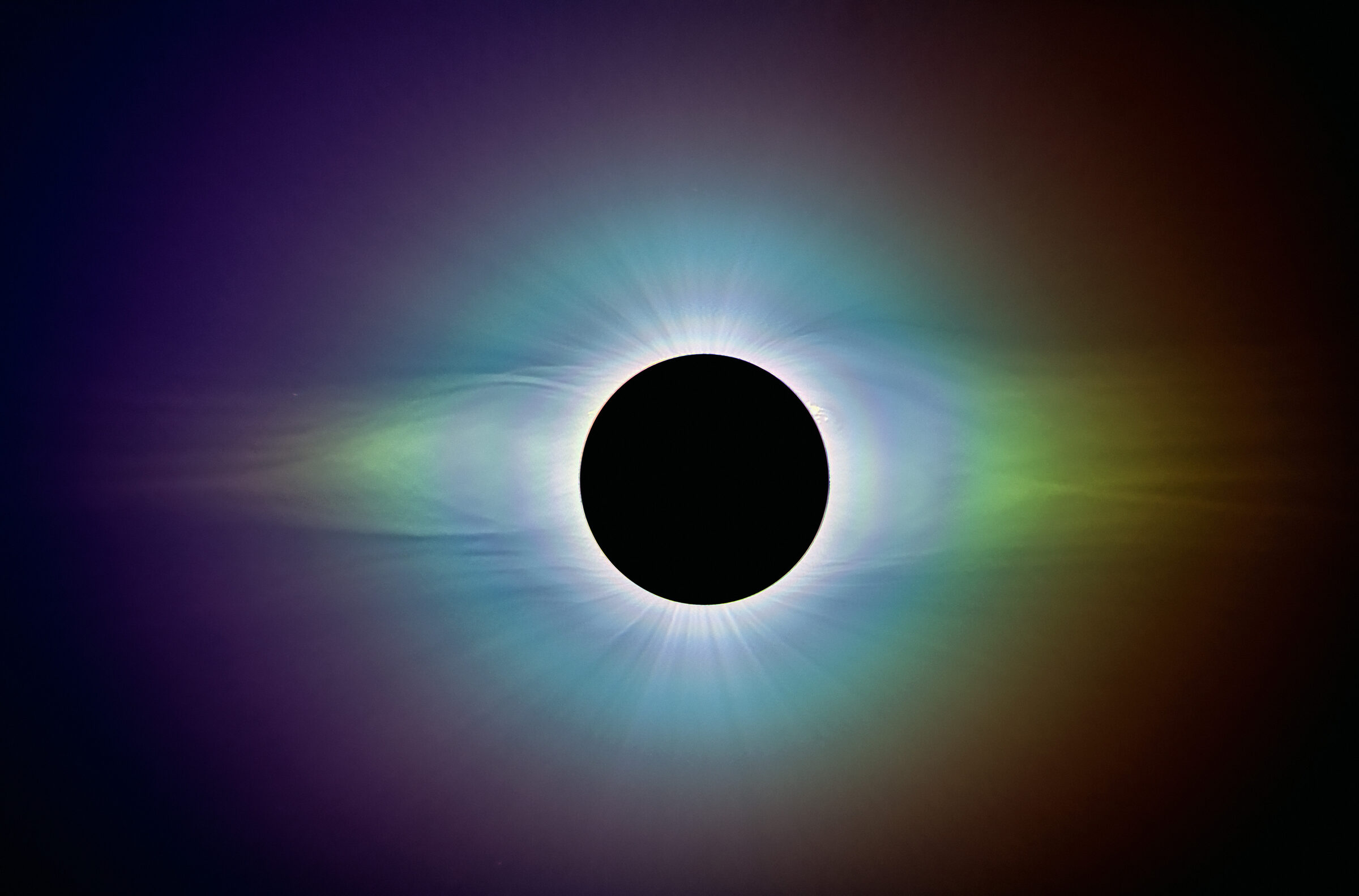
View of the solar system from the Parker Solar Probe mission

Universidad de Santiago de Chile — Department of Physics

Heliophysics and Space Weather

We study the Earth's magnetosphere, radiation belts, and solar wind coupling using satellite data and ground-based observations. Our group develops machine learning tools for space weather prediction and contributes to Chile's first national space weather monitoring platform.

Credit: NASA/PSPL/PIA23789

Research

Our research lines

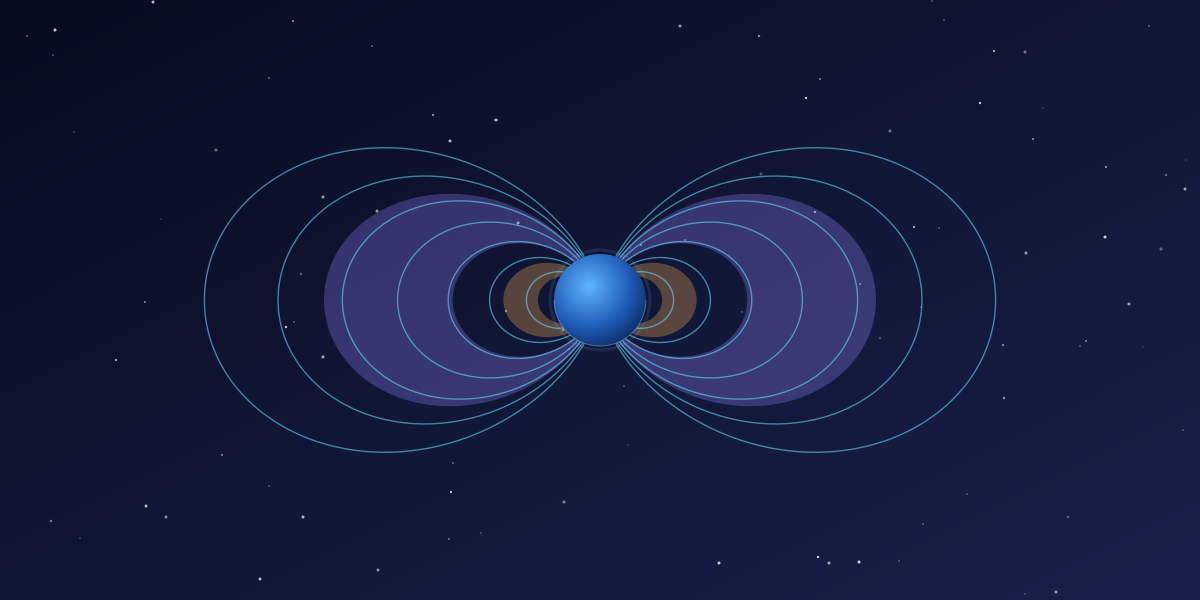
Van Allen radiation belts around Earth
Space physics

Radiation belt dynamics

Energization, transport, and decay of relativistic electrons in the Van Allen belts. Enhancement and dropout events during geomagnetic storms. Formation and evolution of ultrarelativistic remnant belts. Adiabatic and non-adiabatic processes in the outer radiation belt.
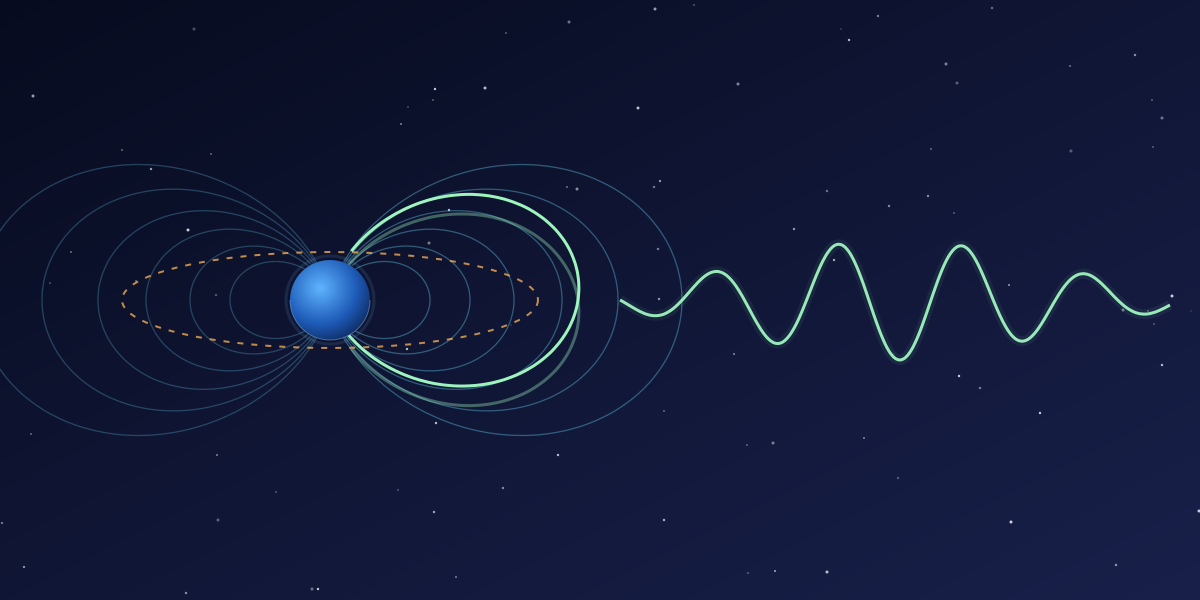
ULF waves in the Earth's magnetosphere
Space physics

ULF waves and magnetospheric turbulence

Role of electromagnetic ULF waves in trapped particle dynamics. Magnetospheric turbulence and total pressure balance during storms and substorms. Eddy diffusion in the plasma sheet. Wave-particle interactions.

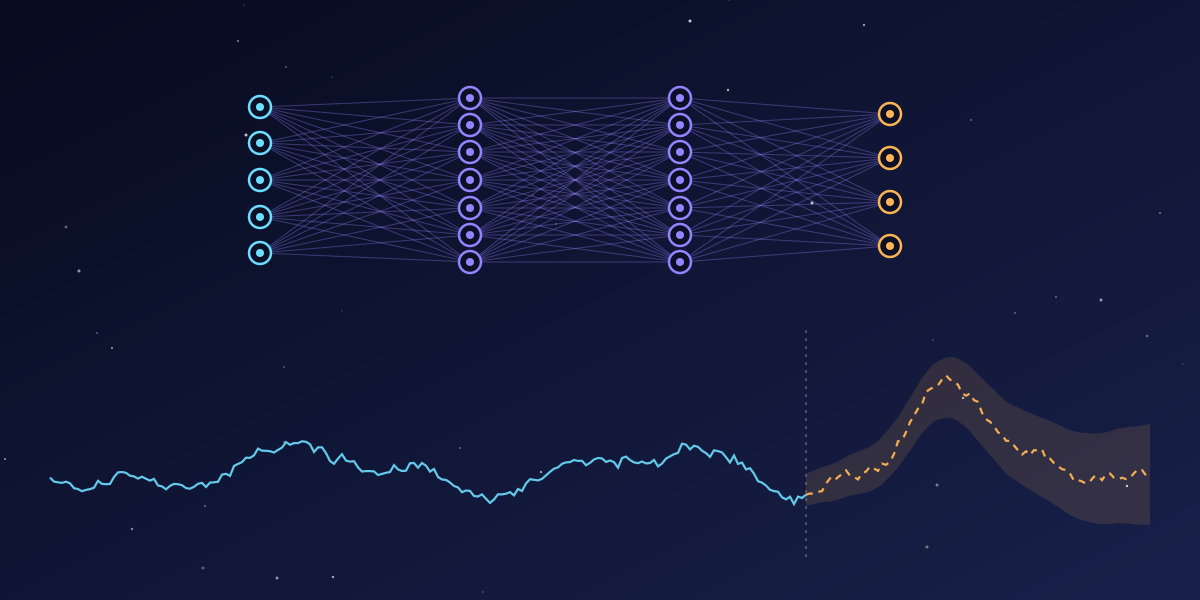
Space weather prediction model
Data science

Space weather prediction with ML

Prediction of ground magnetic perturbations and geomagnetically induced currents (GIC). Probabilistic forecasting using deep learning (LSTM, CNN). ML model explainability for operational space weather. Plasmapause location with machine learning.

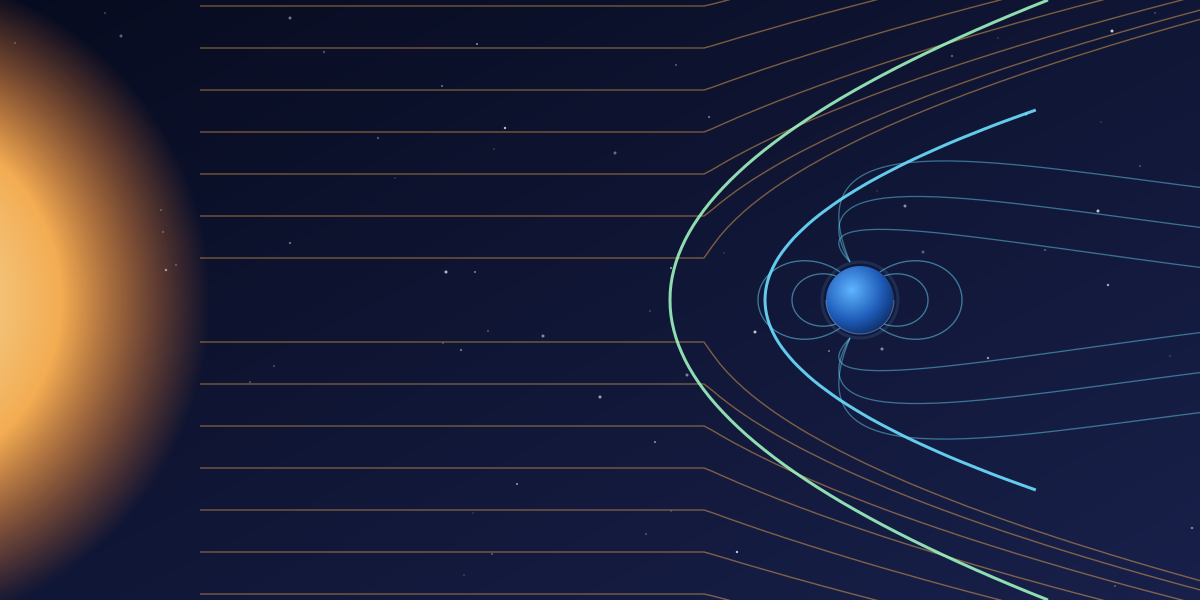
Solar wind interacting with Earth's magnetosphere
Space physics

Solar wind — magnetosphere coupling

Solar wind dynamic pressure effects on magnetospheric turbulence. Foreshock transients and magnetospheric perturbations. Expanding plasma systems: solar and stellar winds. Adiabatic invariants and non-adiabatic mechanisms in solar wind expansion.

See all research lines and projects →

Active grants

Current projects

Space weather monitoring dashboard

FONDEF IDEA I+D — ANID

Chilean Space Weather Platform

Chile's first national pilot platform for real-time space weather monitoring and early warnings, with ML-based predictive models. In collaboration with Universidad Adventista de Chile.

Real-time monitoringDL forecastingGIC prediction
Van Allen Probes satellite data

FONDECYT Initiation 2025 — ANID

ULF waves and trapped particles

The role of electromagnetic ULF waves in the dynamics of charged particles trapped in Earth's radiation belts.

Van Allen ProbesTHEMISGOES
Turbulence in the magnetosphere

FONDECYT Regular 2025 — ANID (PI: M. Stepanova)

Turbulence and pressure balance in the magnetosphere

Turbulence and total pressure balance in the interconnected dynamic magnetosphere during storms and substorms.

Magnetospheric turbulencePressure balanceStorm dynamics
See all active grants →

Publications

Recent publications

  • 2026

    The Role of auroral phenomena in the dynamics of the outer radiation belt

    Inostroza, A.M., ..., Pinto, V.A., et al. — JGR: Space Physics · DOI

  • 2026

    Role of the solar wind dynamic pressure in magnetospheric turbulence

    Stepanova, M.V., Pinto, V.A., et al. — Physica Scripta · DOI

  • 2025

    Radial evolution of ultrarelativistic electrons during enhancement events

    Pinto, V.A., Espitia, Y., et al. — Physica Scripta · DOI

  • 2025

    Using ML explainability to examine drivers of ground magnetic field localization

    Coughlan, M., ..., Pinto, V., et al. — Space Weather · DOI

  • 2025

    On ULF Wave Power and Changes of Relativistic Electron Fluxes

    Lara, C., Pinto, V.A., et al. — Universe · DOI

See all publications →

Labs

Our laboratories

The group operates two research labs. The Space Instrumentation Lab maintains ground-based magnetometer networks (SAMBA chain) and supports field campaigns. The Space Weather Lab develops real-time monitoring and ML-based prediction systems for geomagnetic disturbances and relativistic electron dynamics.

See our labs and data sources →

Contact

Open positions

We are looking for master's and undergraduate students to work on relativistic electron dynamics, geomagnetic storm prediction with deep learning, GIC modeling, satellite data processing (Van Allen Probes, THEMIS, GOES), and magnetospheric turbulence. If you are a physics, astrophysics, or related student, email us at victor.pinto@usach.cl